Sunday, February 13, 2011

Tuesday, February 8, 2011

handmade typefaces hmmm

marian bantjes

eduardo recife


"alphabet soup" by angelique westerhof

tiana vasilijev


hand jobs

3d typography

Mafuyu


monica canilao

inspirations


yoshikazu yamagata

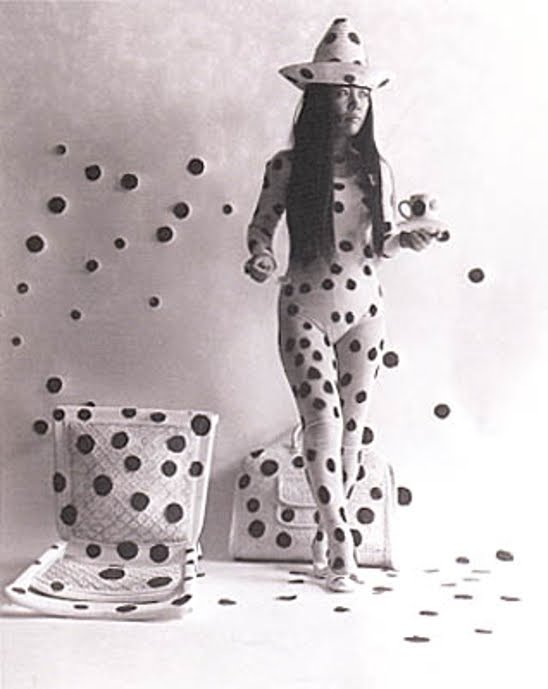
Yayoi Kusama


monica canilao

i still love houses. and polka dots


Thursday, February 3, 2011

Assignment#3 inventory

Soft: 30" x 23" x 18", 2009, cotton couch piping; hand knit


Weight: 67" x 30" x 30", 2010, 100 pounds of cotton rope; hand knit with arms
+back


Neck Piece: 16" x 17" x 10", 2010, over spun wool; hand knit


Purple: 33" x 25" x 13", 2010, acrylic machine knit linear element; hand knit
+detail


Grey: 27" x 25" x 26". 2010, silk machine knit linear element; hand knit


Green: 37" x 19" x 15", 2010, cashmere machine knit linear element; hand knit
+detail


Orange: 30" x 28" x 17", 2010, cashmere machine knit linear element; hand knit
+detail


Knit Nests: 2010, newspaper; hand knit


Hair portraits: 2010, handmade paper made of cotton pulp and hair


Paper flag: 2010, handmade paper made of cotton and hair; hand printed


Flag: 2010, recycled shoulder pads from tradition Japanese clothing, cotton, thread


Tsuna: 2010, hair, machine knitted pony wool, cashmere, cotton; hand twisted


Geta: 2010, hair, twine, wood, aluminum


HomeBoyHome: 2009, cotton, tv, wire

Twin Homes: 2009, cotton, wool, wood, wire


HomeBoy: 2009, fabric, handmade rope


    Tuesday, February 1, 2011

    Assignment#2. objectives

    Who do you want to reach?
    I want to reach those who have a relationship to the knit. Whether they recognize knitting from their ugly sweater from grandma, Dave Cole's fiberglass bear, or even knit graffiti, everyone has some kind of history with knit.

    What do you want to express?
    I want to express knitting as not just a traditional medium for garments, but also as a respectable medium for fine art. Through this I will show my views on the search for "home" and my cultural identity. My goal is to push the conventional conceptions of knitting through investigation of pattern, structure, and form.

    How do you want to organize your work?
    I suppose I would organize my work through a internet portfolio that is categorized by medium/process, which would be sub categorized by subject matter/series, then dates. Although I primarily work with knit/fibers, I dabble in illustration as well as printmaking, which will also be presented in the portfolio.

    inspiration again and again:
    Mafuyu's knitted homes

    Monday, January 31, 2011

    Assignment#1. bio and work


    • Autobiography:
    • Born in the sunflower state in the dead of winter.
    • The same day as Babe Ruth, my third grade teacher, and Ronald Reagan. You win some, you lose some.
    • I grew up with 3 sisters. 3 out of 4 of us were tomboys.
    • Although I am the eldest, I am the shortest. I like to say I'm 5', but really I'm 4' 11 3/4''.
    • I lived in Boulder, Colorado for a year. I was going to major in sociology. I'm not sure what I was thinking.
    • Now I attend the Kansas City Art Institute, majoring in fibers. I'm still not sure what I'm thinking.
    • Sometimes I miss the Colorado mountains, but I always miss the food there.
    • I work at Whole Foods. I can't wait till I don't have to say that anymore.
    • My guilty pleasures are Korean soap operas.
    • I love scallops of all kinds.
    • I want to be buried with my knitting needles.

    • Artist Statement:
    • As a first generation Japanese-American, I am attempting to realize and balance these two different cultures and their effects on my art. My lineage is the base of my identity, just as interlacing structures are the base of my work. Although not all of my pieces are specifically about my roots, they never cease to be apparent in my work.
    • Interlocking structures, whether in a knit or in handmade paper, is what informs my material choices. The process of creating my own fiber elements to work with is crucial to the conceptual development of my work because of how it refers to the two cultures I grew up in. After working with the structural possibilities inherent within each material, I push it a step further by using my own hand to instruct the form. By pushing the possible relationships between form, material, and textile processes, I create work that allows me to explore my ideas about self-identity.